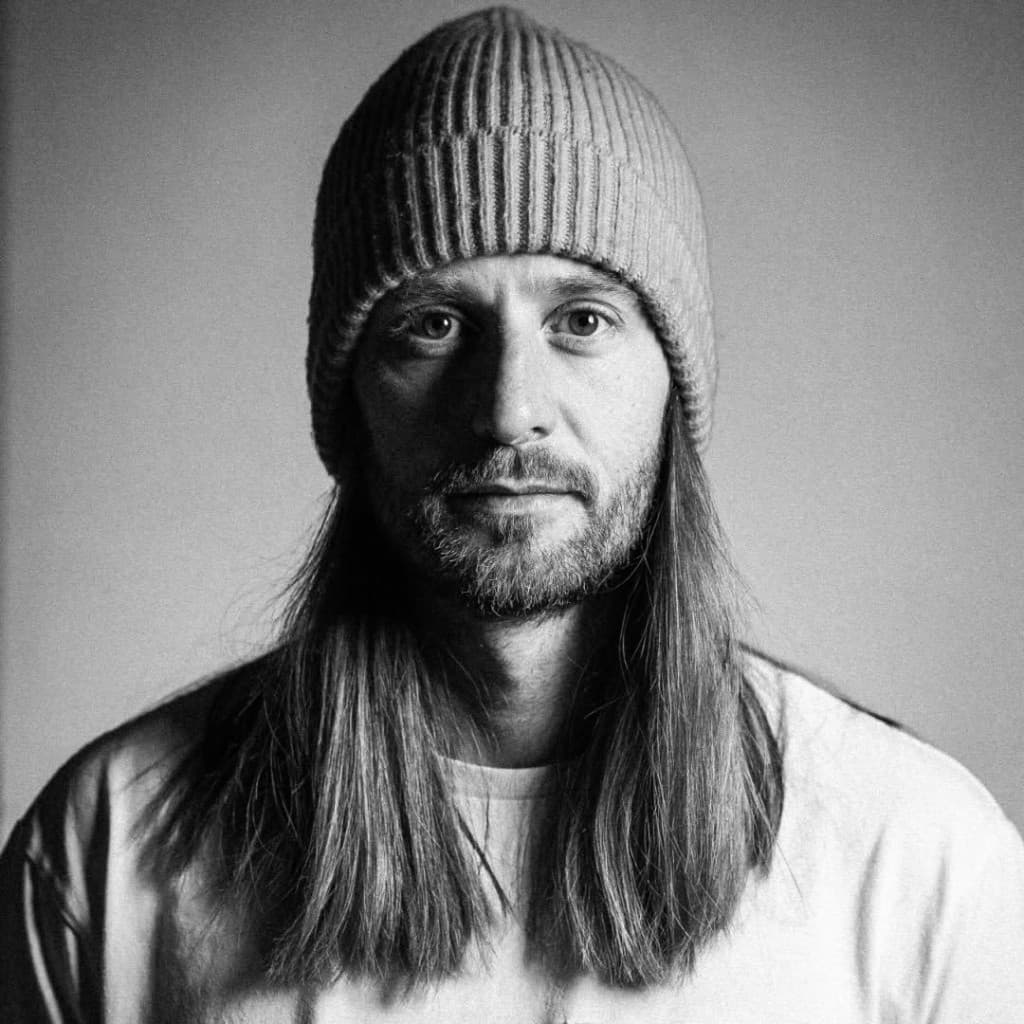
Bogusław AI
A working AI memory of my grandfather, rebuilt from an old VHS tape, family stories, and a real time voice model.
Bogusław AI is a working prototype of my grandfather's memory. It started as a small art installation idea and turned into something bigger: a long term project pairing a documentary film with an installation that holds an increasingly complete memory of him, built from a single VHS tape and stories from the people who actually knew him.
The whole thing is fully open source. Code, prompts, and the interface are public on GitHub for anyone who wants to see how it works or build something similar.
Rebuilding a voice from one tape
That VHS tape is the clearest recording of my grandfather's voice that exists. Cloning it with ElevenLabs, and putting a real time layer on top with OpenAI's realtime API, gave me something I could actually hold a conversation with. Every memory I add now, from parents, aunts, cousins, gets folded into that same voice. It's less a recreation of one person's memory of him and more a shared, composite one.
Privacy is a real concern once something this personal can talk back, so the project has also pulled me toward local models. I'd rather this eventually run entirely on hardware I own than on someone else's servers, which is part of why I've started looking seriously at building a small local AI rack.
Speaking and listening
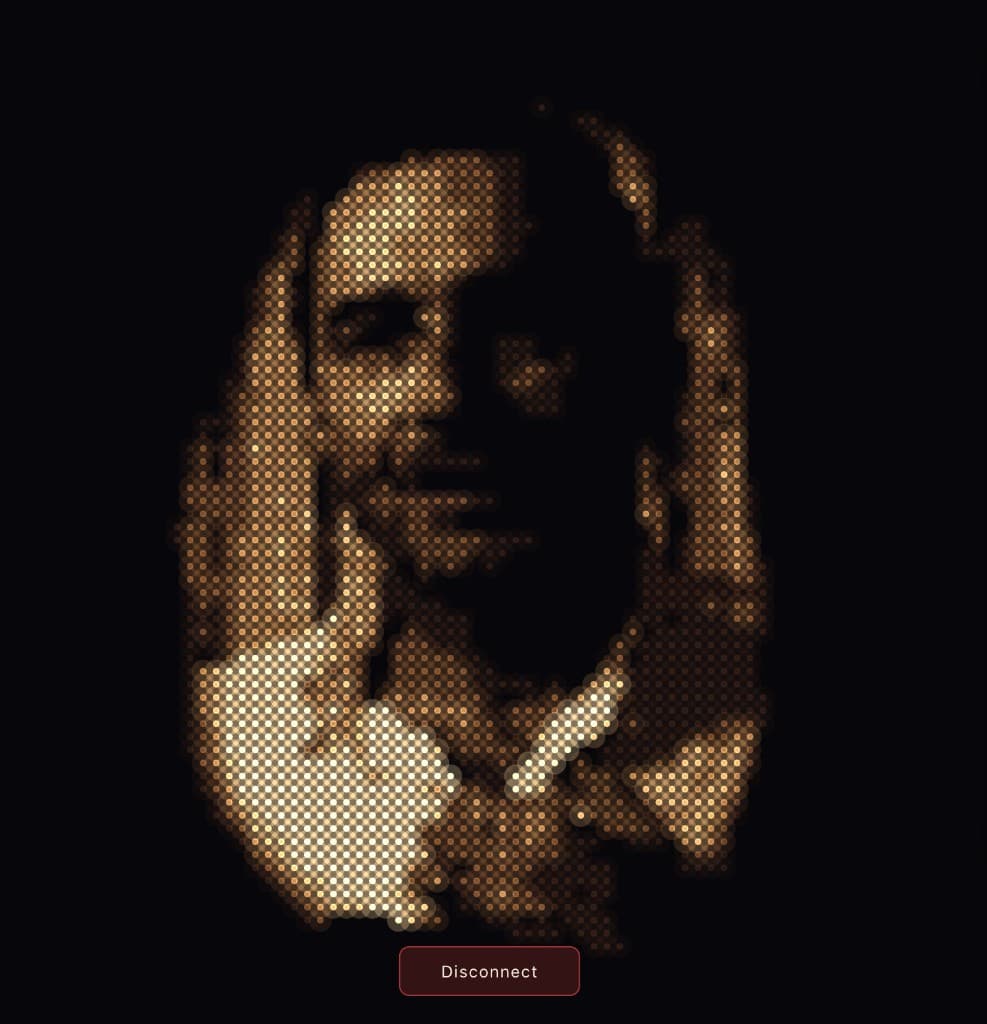
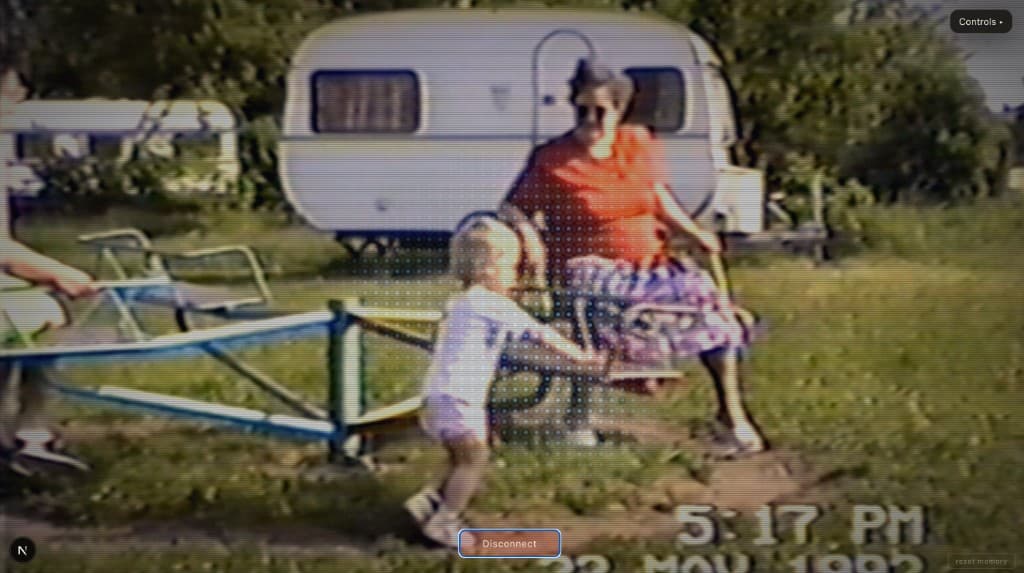
Live lip sync is still slow and expensive, and a bad version of a face is worse than no face at all. So the interface works in two modes instead: speaking and listening. While it's listening, it's just a rough, almost unrecognizable pattern of light, close to how a face fades in memory when someone isn't around to remind you what they actually looked like.
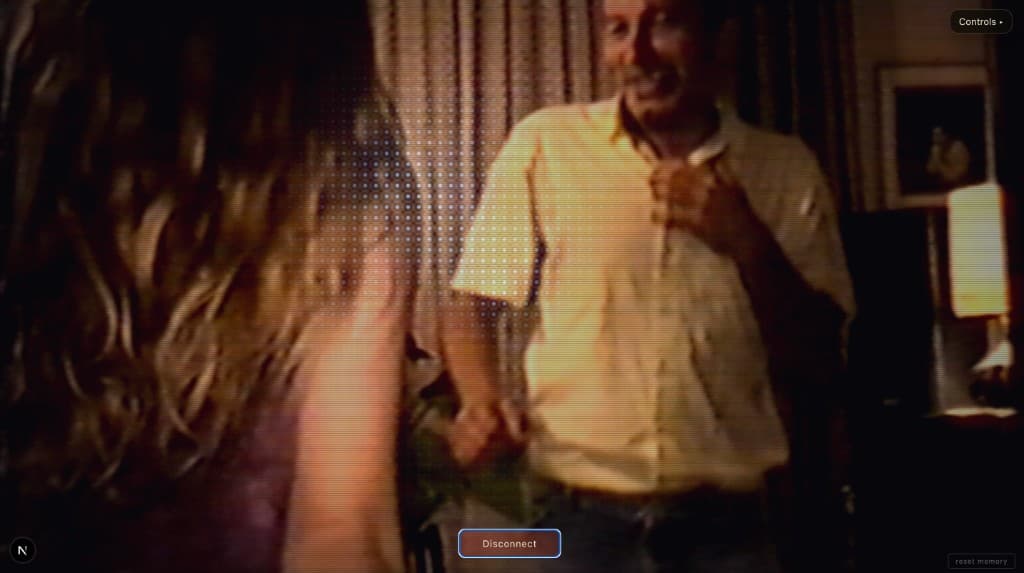
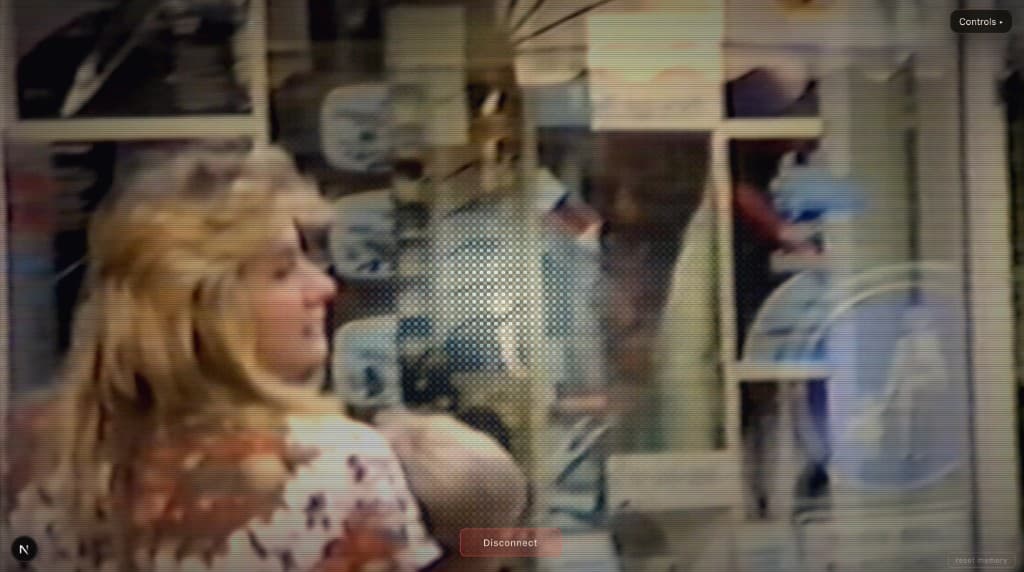
The moment it starts speaking about a specific memory, an old VHS clip tied to that memory plays behind it.
A memory that keeps changing
This isn't a fixed script of answers. Every conversation shapes how it responds the next time, and every new detail a family member shares gets absorbed into it. It's not trying to be a historically accurate record. It's trying to feel like how memory actually works: overlapping, occasionally contradicting itself, changing shape depending on who's remembering.
The documentary
Alongside the installation, I'm filming a documentary about the whole process. The plan is to sit down with my closest family members, in front of the finished result, and film their reaction. I want that moment to sit somewhere unusual: not really about death, but about how different our private memory of someone is from a fuller, combined version built from everyone who knew them.
Where it stands
This is very much a work in progress, and my main personal project this year. The voice and the growing memory already hold up in conversation; the harder open problems are full local inference, more natural turn taking, and an interface that stays honest about being a reconstruction rather than pretending to be more than it is. It's the most personal thing I've built, and probably the one I care most about getting right.